
Geometry Arrow



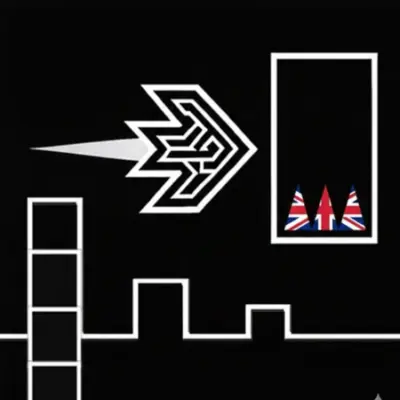

Geometry Arrow pioneered the “directional-dash” sub-genre, introducing revolutionary mechanics where you aren’t merely a cube executing vertical jumps—you’re an arrow navigating gravity-defying gaps through continuous directional control that fundamentally reimagines rhythm platforming.
This conceptual leap transformed passive timing exercises into active flight navigation, creating the foundation upon which sequels and inspired creations have built their own interpretations of directional gameplay within rhythm frameworks.
The core distinction proves profound rather than superficial. Traditional geometry games ask “when should I jump?” whilst Geometry Arrow demands “which direction should I fly?” This shift from temporal to spatial decision-making engages different cognitive processes, creating novel challenges that feel fresh even for players who’ve mastered conventional rhythm platformers through hundreds of hours of practice.
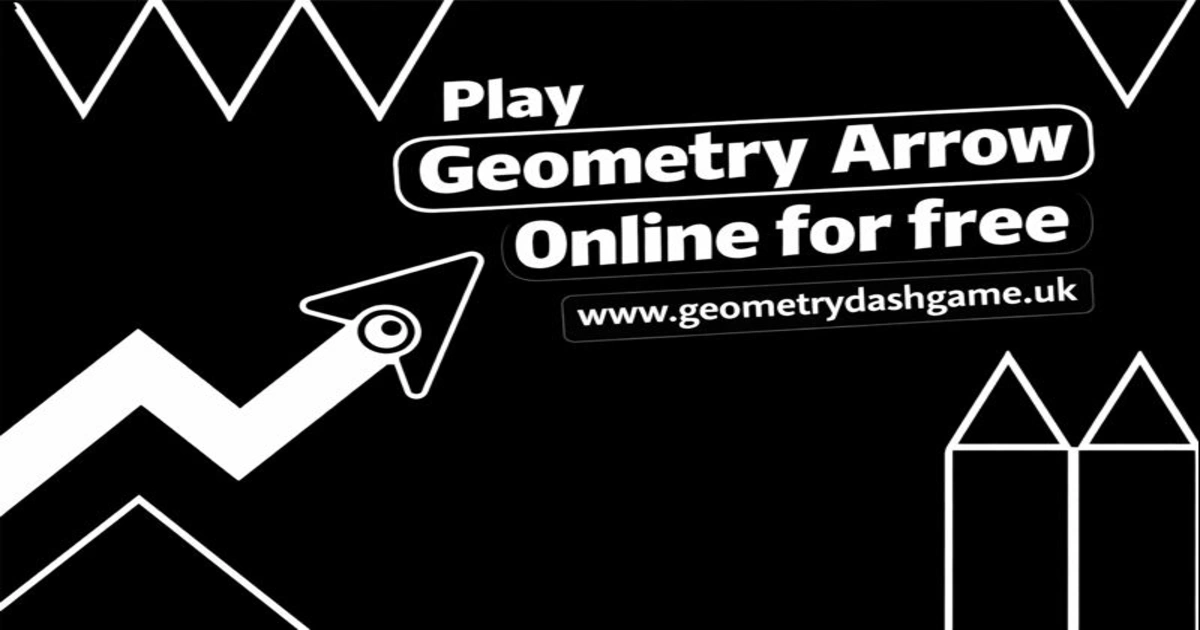
The Arrow Mechanic: Gravity vs Direction Fundamentals in Geometry Arrow
Understanding Arrow Physics
The “Arrow” physics system in Geometry Arrow employs constant forward movement combined with click-to-steer vertical control, creating continuous navigation demands rather than discrete jumping decisions. Your arrow perpetually advances horizontally whilst vertical positioning responds to clicking—hold to ascend, release to descend. This continuous control paradigm eliminates the “safe” moments between jumps that traditional platformers provide, maintaining relentless engagement throughout gameplay.
The click-to-steer logic proves more intuitive than it initially appears. Natural bird flight analogies help—flapping wings (clicking) generates lift whilst ceasing flapping (releasing) allows gravity to reclaim control. This biomimetic control scheme feels organic once internalised, though initial attempts often produce erratic altitude oscillations as players calibrate input frequency against gravitational descent rates.
Fluid Movement Superiority
The mechanics feel more fluid than standard jumping through continuous control authority rather than committing to predetermined jump arcs. You maintain trajectory adjustment capability throughout flight, enabling mid-course corrections that binary jump/don’t-jump mechanics cannot accommodate. This dynamic control creates satisfying precision where successful navigation feels actively guided rather than fortunately timed.
The smoothness stems from eliminating the jerky transitions between grounded and airborne states that jumping creates. Your arrow exists in perpetual flight, removing the visual and mechanical discontinuities that jumping introduces. This consistent state creates the flowing navigation experience that defines directional gameplay’s unique appeal within rhythm gaming contexts.
Setting the Standard for Sequels
This original version established foundational mechanics that sequels refined rather than fundamentally reimagined. The core arrow physics, continuous control paradigm, and directional navigation challenges originated here, with subsequent iterations enhancing rather than replacing these proven systems. Understanding the original provides essential context for appreciating how sequels evolved whilst maintaining conceptual continuity with pioneering foundations.
The innovation’s significance extends beyond Geometry Arrow specifically into broader rhythm gaming influence where directional control mechanics have inspired numerous derivatives and spiritual successors. The original’s legacy lives through this expansive influence, demonstrating genuine innovation rather than mere novelty that fades without lasting impact on genre evolution.
Why Geometry Arrow is a UK Browser Classic
Minimalist Graphics: Performance Excellence
The minimalist 2D graphics ensure stable 60 FPS performance across any UK school or office network regardless of hardware specifications or connection quality. The restrained visual approach prioritises gameplay smoothness over graphical excess, demonstrating design maturity where functional excellence supersedes aesthetic showboating. This pragmatic philosophy creates universally accessible experiences rather than hardware-exclusive showcases.
The art style choice proves timeless through geometric simplicity that never appears dated. Whilst graphically ambitious games age poorly as technical standards advance, minimalist designs maintain visual appeal indefinitely through clean clarity that transcends temporal aesthetic trends. This longevity contributes to classic status—the game remains as visually appropriate today as upon initial release.
100% Unblocked Modern Compatibility
The game is 100% unblocked across UK educational and workplace networks through HTML5 architecture that institutional content filters explicitly permit. No Flash requirements eliminate the compatibility issues plaguing older browser games, ensuring continued functionality as browsers evolve and deprecated technologies fade. This future-proof foundation guarantees long-term accessibility beyond what legacy platforms can provide.
Modern browser compatibility spans Chrome, Firefox, Safari, and Edge without platform-specific quirks or performance disparities. The standards-compliant implementation ensures identical experiences regardless of browser preferences or institutional technology mandates. This universal access democratises quality directional rhythm gaming across diverse UK computing environments.
Instant Respawn: Addictive Iteration
The instant respawn feature eliminates frustration delays that would break the addictive spell continuous rapid attempts create. Crash and you’re flying again within 0.2 seconds—no game-over screens, no loading times, no momentum-killing pauses between attempts. This seamless retry access creates the “just one more try” compulsion that defines addictive gaming, where failure feels like temporary setbacks rather than punitive endpoints.
The psychological impact proves enormous through maintaining engagement flow despite frequent failures. Without delays forcing reflection on performance inadequacy, crashes feel like natural rhythm interruptions rather than defeating judgements. This emotional management through technical design enables the persistent attempts necessary for mastery without accumulating demoralising frustration that would drive players away.
Essential Tips for New Pilots: Mastering Basics
The “Straight Fly” Technique: Level Navigation
Maintaining level flight in narrow corridors demands understanding the neutral click rhythm that balances ascent against gravitational descent. This equilibrium clicking—neither too frequent (causing ceiling crashes) nor too sparse (allowing floor collisions)—creates stable horizontal flight enabling safe corridor navigation without constant altitude corrections consuming attention.
- Find your neutral rhythm during practice sections where forgiving corridor heights permit experimentation discovering the click frequency maintaining stable altitude.
- Develop muscle memory for neutral clicking until it becomes automatic background activity rather than conscious effort demanding attention.
- Adjust rhythm proactively when corridors tighten or widen, anticipating required frequency changes rather than reactively scrambling after altitude problems emerge.
- Use audio feedback from clicking establishing rhythmic patterns that ears recognise more readily than eyes detect altitude micro-adjustments.
Visual Lead: Anticipatory Focus
Look ahead of the arrow rather than at it in Geometry Arrow using peripheral vision for current position awareness whilst central focus tracks upcoming obstacles. This forward-looking attention provides crucial processing time identifying hazards and planning navigation before they become immediate threats demanding instant reactions. Fixating on the arrow itself creates reactive scrambling rather than proactive control.
- Train eyes systematically in Geometry Arrow, resisting natural tendencies focusing on controlled objects, deliberately practicing forward focus despite discomfort until it becomes habitual.
- Use arrow position peripherally trusting side vision for sufficient positional awareness without requiring direct focal attention.
- Scan approaching obstacles identifying patterns and planning trajectories before obstacles occupy current navigational space.
- Maintain consistent lead distance—approximately 2-3 seconds ahead—providing optimal balance between immediate awareness and advance planning.
Small Bursts: Precision Control Philosophy
Short clicks prove superior to long holds in Geometry Arrow for better control through maintaining altitude adjustment flexibility. Brief taps provide incremental lift enabling precise positioning, whilst sustained holds commit to extended ascent limiting mid-course correction capability. This granular control philosophy maximises navigational authority through preserving continuous adjustment options.
- Develop staccato clicking patterns in Geometry Arrow, creating small altitude adjustments rather than dramatic swoops requiring subsequent correction.
- Reserve sustained holds exclusively for situations demanding rapid significant altitude gains where precision becomes secondary to velocity.
- Practice click duration consistency ensuring each tap provides predictable lift quantities enabling accurate altitude control through reliable input responses.
- Combine with rhythm awareness timing short clicks musically rather than arbitrarily, integrating control technique with rhythm mechanics for holistic mastery.
Performance on Low-Spec Devices: Accessibility Excellence
Chromebook users and older laptop owners throughout the UK can confidently play Geometry Arrow without performance concerns thanks to exceptional optimisation prioritising universal accessibility. The lightweight architecture of Geometry Arrow runs smoothly on integrated graphics, modest processors, and limited RAM configurations that contemporary games often exclude through excessive resource demands.
The high optimisation stems from disciplined minimalism where every graphical element and code function serves essential purposes rather than merely showcasing technical capability. This efficiency-focused design philosophy creates the performance headroom enabling smooth 60 FPS gameplay even on hardware contemporary gaming typically abandons as obsolete or insufficient.
Specific Chromebook compatibility receives particular attention given these devices’ prevalence in UK education. Budget educational Chromebooks with entry-level specifications deliver excellent experiences proving that quality gaming in Geometry Arrow needn’t require expensive hardware when developers prioritise accessibility alongside entertainment. This democratic approach ensures economic circumstances don’t determine gaming access.
Older laptop longevity extends through games like Geometry Arrow demonstrating that perfectly satisfying gaming experiences remain achievable on hardware contemporary releases ignore. Players needn’t constantly upgrade equipment to enjoy quality entertainment—thoughtfully designed games respect diverse hardware realities rather than demanding cutting-edge specifications for artificial technical prestige.
The Legacy of Geometry Arrow: Foundation for Evolution
This pioneering game led directly to Geometry Arrow 2 and 3D iterations that refined and expanded upon foundational mechanics established here. The original’s success validated directional navigation within rhythm gaming contexts, providing proof-of-concept justifying further development investment. Without this original’s innovation and reception, the expansive directional rhythm sub-genre might never have emerged.
Starting here provides essential context for appreciating how sequels evolved mechanics, enhanced visuals, and increased challenge complexity whilst maintaining conceptual continuity with original foundations. Players who jump directly to sequels miss the pedagogical progression understanding original fundamentals provides, potentially struggling with advanced iterations that assume foundational knowledge from original mastery.
The recommendation for new players consistently emphasises beginning with the original before advancing to sequels. This progressive approach builds skills systematically through appropriate difficulty curves rather than overwhelming players with sequel complexity before they’ve developed fundamental competencies. Starting here creates optimal learning pathways toward eventual sequel mastery.
Explore the Geometry Arrow Series
Mastered the basics in Geometry Arrow? The challenge is just beginning! Take your precision to the next level with the newer versions or try our top-rated rhythm games for more fast-paced action.
Arrow Series Evolution
Fast Reflex Challenges
Aim for Perfection! Master the original arrow challenge and stay on track. Discover more exciting worlds:
Beginner-Focused FAQ: Getting Started Questions
Is Geometry Arrow Unblocked Free?
Yes—completely free without hidden costs, premium tiers, or paywalls restricting content access. All gameplay remains available to everyone regardless of payment, ensuring economic accessibility alongside technical accessibility. We believe quality gaming should be universally available, which is why we’ve committed to keeping Geometry Arrow free permanently for UK players seeking directional rhythm challenges.
How Do I Control the Arrow on a Laptop?
Click mouse buttons or press spacebar/up arrow to generate lift, release to allow descent. The simple one-button control scheme eliminates complex input memorisation, focusing challenge on timing and spatial reasoning rather than mechanical execution complexity. Most players find mouse clicking most comfortable, though keyboard alternatives work identically for those preferring different input methods.
Why is Geometry Arrow Easier (or Harder) Than Original Geometry Dash?
Difficulty comparisons prove subjective because the games test different skill sets. Geometry Dash emphasises precise timing for discrete jumps, whilst Geometry Arrow demands continuous spatial navigation and altitude management. Players proficient at timing-based challenges may initially struggle with directional control demands, whilst those comfortable with continuous control might find binary jumping more challenging. Neither is objectively easier—they’re different challenge types appealing to varied cognitive strengths.
Can I Play on Mobile Devices?
Yes—touch controls work excellently on smartphones and tablets through responsive tap mechanics. Screen taps generate lift identically to mouse clicks, providing intuitive control that many players actually prefer over desktop input methods. The game scales beautifully across device sizes whilst maintaining comfortable playability from compact phones to generous tablets.
How Long Does Mastery Take?
Basic competence develops within 30-60 minutes of focused play for most players, though true mastery requiring consistent high-level performance demands 5-10 hours of dedicated practice. The learning curve proves accessible initially whilst providing substantial depth rewarding extended skill development. Progression feels constant throughout the journey from tentative beginner to confident pilot.
Are There Different Difficulty Modes?
The original features progressive difficulty through level design rather than explicit mode selections. Early sections introduce mechanics gently, middle stages combine elements with moderate challenge, and late content demands absolute mastery. This organic scaling provides appropriate challenge throughout skill development without requiring manual difficulty selection that might overwhelm or bore through inappropriate choices. Learn more about game difficulty design.
Final “Begin the Flight” Challenge!
Ready to experience where directional rhythm began? Launch Geometry Arrow Unblocked right now and master the fundamental mechanics that revolutionised rhythm gaming by introducing genuine directional navigation. With guaranteed unblocked UK access, flawless 60 FPS performance even on modest hardware, and the pioneering rhythm mechanics that spawned an entire sub-genre, you’re moments away from understanding why this original remains beloved despite numerous successors!
Your foundational challenge: Master the basics before advancing to sequels. Can you develop the neutral flight rhythm maintaining stable altitude? Can you train forward-looking vision providing crucial reaction time? Can you achieve the precise control that short burst clicking enables? True mastery means building these fundamental skills thoroughly before tackling sequel complexities that assume original competence!
Start your directional journey where the revolution began! Share progress with friends learning alongside you, discuss technique discoveries that accelerate improvement, and celebrate milestone achievements marking your evolution from tentative beginner to confident pilot. The journey from first awkward attempts to graceful navigation provides genuine satisfaction worth experiencing fully!
Whether you’re seeking the Geometry Arrow game online that pioneered directional mechanics, want to play Geometry Arrow free without restrictions or costs, or simply appreciate experiencing gaming innovation at its origin rather than through derivative iterations, this foundational classic delivers timeless excellence!
The flight begins. The fundamentals await. Your directional mastery starts now!
Experience Geometry Arrow today and discover why UK players, rhythm enthusiasts, and gaming historians celebrate this as the original that changed rhythm gaming’s direction—literally and figuratively—inspiring countless derivatives whilst remaining definitively excellent on its own merits!
Begin the flight—master the fundamentals! ✈️🎮
Gameplay Video